A lifting point is the interface between a load and the lifting gear, and the choice comes down to how the load will be pulled.
A plain eyebolt is for vertical lifting only. It has no collar, so nothing resists a sideways pull, and angular load acts on the thread root where you cannot see it. A collared eyebolt has a machined face that seats against the load and may be used at an angle with derating. A swivel hoist ring goes further again: it pivots and rotates to align itself with the pull, so the rigger cannot get the orientation wrong.
Every leg of a multi-leg sling is at an angle by definition. That single fact decides most of these choices.
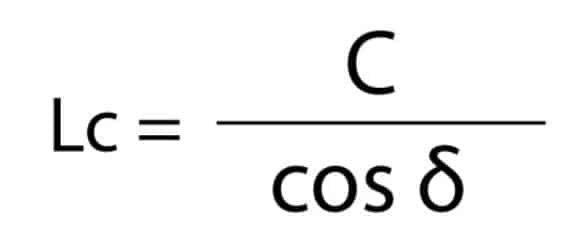
Manufacturer specification. Grade 10 high resistant alloy steel. Black painted finish. Minimum breaking load is 2 times the W.L.L. Marked with CE, W.L.L, material grade, manufacturers ID, product ID mark and traceability code. Full CAD support available upon request. In particular applications the capacity which has to be used must be determined by the pulling inclination angle following the formula. Lc = capacity needed per single bracket. C = load to anchor. δ = pulling inclination angle
Key Features
- Black finish: Identifies the range on site — never repaint a lifting product
- Minimum breaking load 2 times the W.L.L.: The safety factor built into the rating
- Grade 10 high resistant alloy steel: As specified by the manufacturer
- Black painted finish: As specified by the manufacturer
- Minimum breaking load is 2 times the W.L.L. Marked with CE, W.L.L, mat: As specified by the manufacturer
- Full CAD support available upon request: As specified by the manufacturer
- In particular applications the capacity which has to be used must be d: As specified by the manufacturer
- Lc = capacity needed per single bracket: As specified by the manufacturer
Technical Specifications
| Product Code (without spring) |
Product Code (with spring) |
G (mm) |
H (mm) |
Welding Thickness (HV + Δa) |
Weight (kgs) |
| G10SBLAR3 |
G10SBLAR3S |
31 |
79 |
HV 5+3 |
0.39 |
| G10SBLAR5 |
G10SBLAR5S |
34.5 |
91 |
HV 7+3 |
0.59 |
| G10SBLAR8 |
G10SBLAR8S |
40 |
102 |
HC 8+3 |
0.87 |
| G10SBLAR13 |
G10SBLAR13S |
58.5 |
141 |
HV 12+4 |
2.23 |
| G10SBLAR20 |
G10SBLAR20S |
70.5 |
157 |
HV 16+4 |
3.33 |
| G10SBLAR32 |
G10SBLAR32S |
87 |
219 |
HV 25+6 |
9.28 |
Grade 10 | LOLER Ready
Grade 10 high resistant alloy steel. Black painted finish. Minimum breaking load is 2 times the W.L.L. Marked with CE, W.L.L, material grade, manufacturers ID, product ID mark and traceability code. Full CAD support available upon request. In particular applications the capacity which has to be used must be determined by the pulling inclination angle following the formula. Lc = capacity needed per single bracket. C = load to anchor. δ = pulling inclination angle Under LOLER 1998, lifting accessories require thorough examination by a competent person at intervals not exceeding 12 months, and immediate withdrawal after any overload.
Suitable Applications
Machinery, equipment and fabrications with tapped or welded lifting points: motors, gearboxes, pumps, transformers, moulds and dies, and structural assemblies. Swivel hoist rings suit loads where the sling angle varies or where different people rig the same load, since they remove the alignment decision entirely. Weld-on rings and clutches suit permanent points on skips, containers and fabrications.
More About This Product
Lifting points are the only part of a lifting assembly that stays with the load, and that changes how they should be thought about. A sling belongs to the lifting company and gets inspected on a schedule. An eyebolt tapped into a gearbox belongs to the gearbox, gets painted over, corrodes quietly and is still expected to work five years later when someone needs to move the machine.
Which is why the thread and the tapped hole matter more than the eyebolt itself. The fitting is certified; the hole in the casting is not, and a worn, corroded or under-depth thread will fail long before the eyebolt does.
Angular Loading and Why the Collar Exists
The single most consequential distinction in this category is between a plain eyebolt and a collared one, and it comes down to what happens when the pull is not vertical.
A plain eyebolt has no machined face bearing on the load. Pull it sideways and the entire bending moment acts on the thread root — the point where the shank meets the thread, inside the hole, where nobody can see it. Alloy steel is strong in tension and much less tolerant of bending at a stress concentration, which is why plain eyebolts have no published derating table for angular load. There is no permitted angle because the design does not accommodate one.
A collared eyebolt has a machined face that seats hard against the load. Side load is resisted by that face rather than by the thread, which is why collared eyebolts carry a derating table and plain ones do not. The collar only works if it is fully seated — wound down onto a clean flat face with no gap. A collared eyebolt not tightened home is a plain eyebolt.
A swivel hoist ring removes the decision entirely: it pivots and rotates to align with the pull whatever direction that is, which is why it costs more and why it is the right answer where different people rig the same load.
How to Use
- Establish whether the pull is vertical or angled: A plain eyebolt is vertical only. Any angle needs a collared eyebolt or a hoist ring.
- Screw fully home and seat the collar: The collar bearing on the load face is what resists side load. Unseated, it reverts to a plain eyebolt.
- Check thread engagement depth: The tapped hole must allow full engagement. Insufficient depth is a common and serious error.
- Check the parent material: The rating assumes sound steel. In aluminium, cast iron or a worn thread, the fitting is stronger than the hole.
- Derate for the loading angle: Reductions are steep. Use the manufacturer's figures rather than estimating.
- Do not modify: Never weld, heat, machine, drill or repaint.
Warning: Plain eyebolts are for vertical lifting only. There is no permitted angle and no derating table, because the design does not accommodate one. Angular load acts on the thread root and can cause sudden failure. For any angled lift, use a collared eyebolt or a swivel hoist ring.
Safety Information
- Never exceed the marked Working Load Limit, derated for the loading angle.
- Plain eyebolts are for vertical lifting only.
- The collar must be fully seated against the load face.
- Confirm the tapped hole allows full thread engagement.
- The parent material must be capable of carrying the load.
- Inspect the thread and the tapped hole before every use.
- Never weld, heat treat, machine or repaint.
- Thorough examination by a competent person required at intervals not exceeding 12 months under LOLER 1998.
Inspection and Maintenance
The thread is where a lifting point fails and where inspection should concentrate. Examine the full thread length for damage, stretching, corrosion and any sign of bending at the root — bending indicates it has been loaded at an angle and is grounds for immediate withdrawal. Check the eye or ring for distortion and elongation and withdraw at the manufacturer’s stated wear limit. Inspect the seating face, since a fitting that cannot seat cleanly cannot develop its rating. On swivel types, confirm the swivel and pivot move freely; a seized hoist ring cannot align and is being side loaded without the rigger realising. Inspect the tapped hole in the parent material too, which sits outside the fitting's certification but fails just as readily.
Downloads
Frequently Asked Questions
Q: Can I use a plain eyebolt at a slight angle?
No. There is no permitted angle and no derating figure, because the component is not designed for it. Without a collar there is nothing to take side load, and the bending acts on the thread root where you cannot see it.
Q: What if I have a four leg sling?
Then every leg is at an angle and plain eyebolts are the wrong component. Use collared eyebolts, or swivel hoist rings which align themselves with the load direction.
Q: Collared eyebolt or swivel hoist ring?
A collared eyebolt is fixed and must be aligned with the pull by the rigger, every time. A hoist ring rotates and pivots to align itself. Where the load direction varies, or different people rig the same load, the hoist ring removes the error.