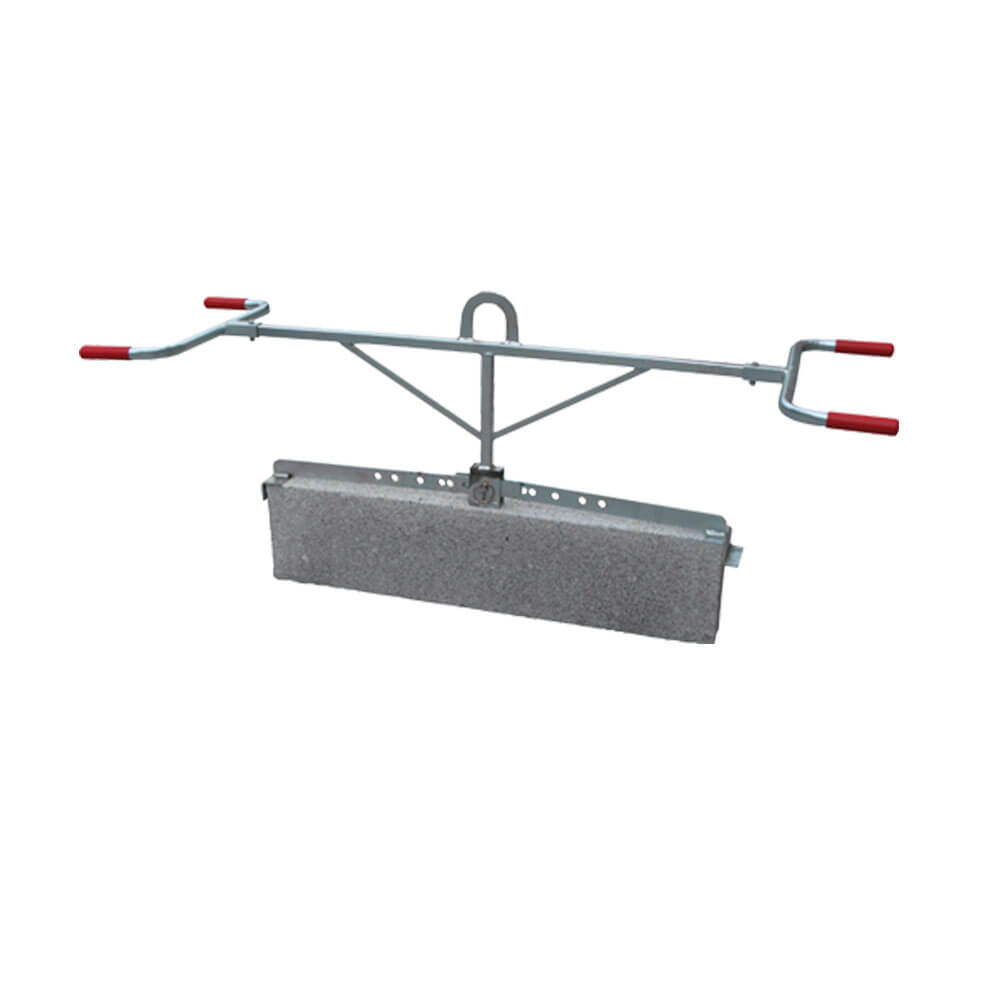
A kerb sorting clamp for the safe and efficient manual handling and placement of kerb stones on construction sites, the Eichinger 1541.1 is carried by hand between two personnel or hung from a chain sling for crane-assisted movement. The one-sided angle support design works where space is at a premium, suiting confined or restricted access areas where a conventional two-sided clamp cannot operate. Replaceable rubber-lined jaws grip the kerb stone securely without damaging its face; manufactured by Eichinger, a German manufacturer with over 100 years of experience.
Key Features
- One-sided angle support design allows the clamp to be used where space is restricted, suited to areas where a conventional two-sided clamp cannot be positioned.
- Two-person manual operation or chain sling use. The 1541.1 is designed for manual carrying by two personnel using the handles, or for suspension from a chain sling for crane-assisted movement and placement.
- Replaceable rubber-lined jaws grip the kerb stone securely without marking or damaging the face of the unit. Jaws can be replaced when worn.
- Suspension lug fitted as standard for attaching a chain sling when crane-assisted movement is required.
- Wide grab range from 500mm to 1050mm accommodates a variety of standard kerb stone lengths.
- Lightweight at 12kg, making it practical for two-person manual use throughout a working day.
Technical Specifications
| Item Code |
SWL |
Grab Range |
Internal Depth |
Weight |
| 1541.1 |
100kg |
500 to 1050mm |
40mm |
12kg |
SWL is the maximum load the clamp is rated to carry. Always confirm the load weight does not exceed 100kg before use. When used with a chain sling, the chain sling must be of the correct rating and be fully certified.
More About This Product
A kerb sorting clamp for the safe and efficient manual handling and placement of kerb stones on construction sites. The 1541.1 is designed for use by two personnel carrying the clamp by hand, or to hang from a chain sling for crane-assisted movement. The one-sided angle support design allows the clamp to be used where space is at a premium, making it suited to confined or restricted access areas where a conventional two-sided clamp cannot operate. Replaceable rubber-lined jaws grip the kerb stone securely without damaging the face of the unit. Manufactured by Eichinger, a German manufacturer with over 100 years of experience in construction site equipment.
Suitable Applications
The 1541.1 kerb sorting clamp is suited to highways, civils and landscaping projects where kerb stones are being offloaded, sorted and placed. The one-sided angle support makes it particularly useful in restricted spaces such as narrow footpaths, tight site boundaries and areas where crane access is limited. It is suitable for use with standard concrete kerb units within the 500mm to 1050mm grab range and up to 100kg in weight.
A grab grips by friction, so surface condition matters and a lift over people needs a positively secured attachment instead. Where the load can be slung, slings and shackles are simpler.
How to Use by Hand
- Inspect the clamp before each use. Check the frame, jaws, rubber linings and suspension lug for damage, deformation or excessive wear. Do not use if defects are found.
- Position the clamp against the kerb stone, engaging the rubber-lined jaws against the face of the unit. Confirm the kerb stone falls within the 500mm to 1050mm grab range and does not exceed 100kg.
- With one operative on each handle, lift the kerb stone clear of the ground. Carry it in a controlled manner to the placement location, keeping the load as low as safely possible during transit.
- Lower the kerb stone to the placement position and release the jaws. Ensure both operatives are in a stable position before lifting and that the route to the placement location is clear of obstructions.
Important:
Two operatives are required at all times when using the clamp by hand. Never exceed the 100kg SWL. Always carry out a manual handling risk assessment before use in accordance with the Manual Handling Operations Regulations 1992.
How to Use with a Chain Sling
Attach a suitably rated, fully certified chain sling to the suspension lug on the clamp. Position the clamp against the kerb stone, engaging the rubber-lined jaws. Raise the crane or hoist slowly to take the weight of the load and confirm the kerb stone is secure and balanced before proceeding with the lift. Lower the kerb stone to the placement position and release the jaws before detaching the chain sling.
Inspection and Maintenance
Inspect before every use, including checks on the frame, jaw mechanism, rubber linings and suspension lug. Replace rubber-lined jaws when worn or damaged to maintain a secure grip on the load. Remove from service if any structural component or the suspension lug shows signs of deformation, cracking or corrosion.
Frequently Asked Questions
Q: Can the clamp be used by one person?
No. The 1541.1 is designed for use by two personnel when operated manually. One operative on each handle is required to carry and place the kerb stone safely. Alternatively the clamp can be suspended from a chain sling for crane-assisted movement, in which case the operative manages positioning and placement at ground level.
Q: What size kerb stones does the clamp accept?
The 1541.1 has a grab range of 500mm to 1050mm, covering a wide range of standard concrete kerb stone lengths. The internal jaw depth is 40mm. Confirm the kerb stone dimensions fall within these parameters before use.
Q: Will the clamp damage the face of the kerb stone?
The jaws are rubber-lined to grip the kerb stone without marking or damaging the face of the unit. The rubber linings are replaceable and should be inspected regularly. Replace them when worn to maintain a secure, damage-free grip.
Q: What is the advantage of the one-sided angle support design?
The one-sided angle support allows the clamp to be positioned and operated where space on one side of the kerb stone is restricted. This makes it suited to confined areas such as narrow footpaths, site boundaries and locations where a conventional two-sided clamp cannot be manoeuvred into position.